Going Off-Grid with Solar: A Journey of Liberation
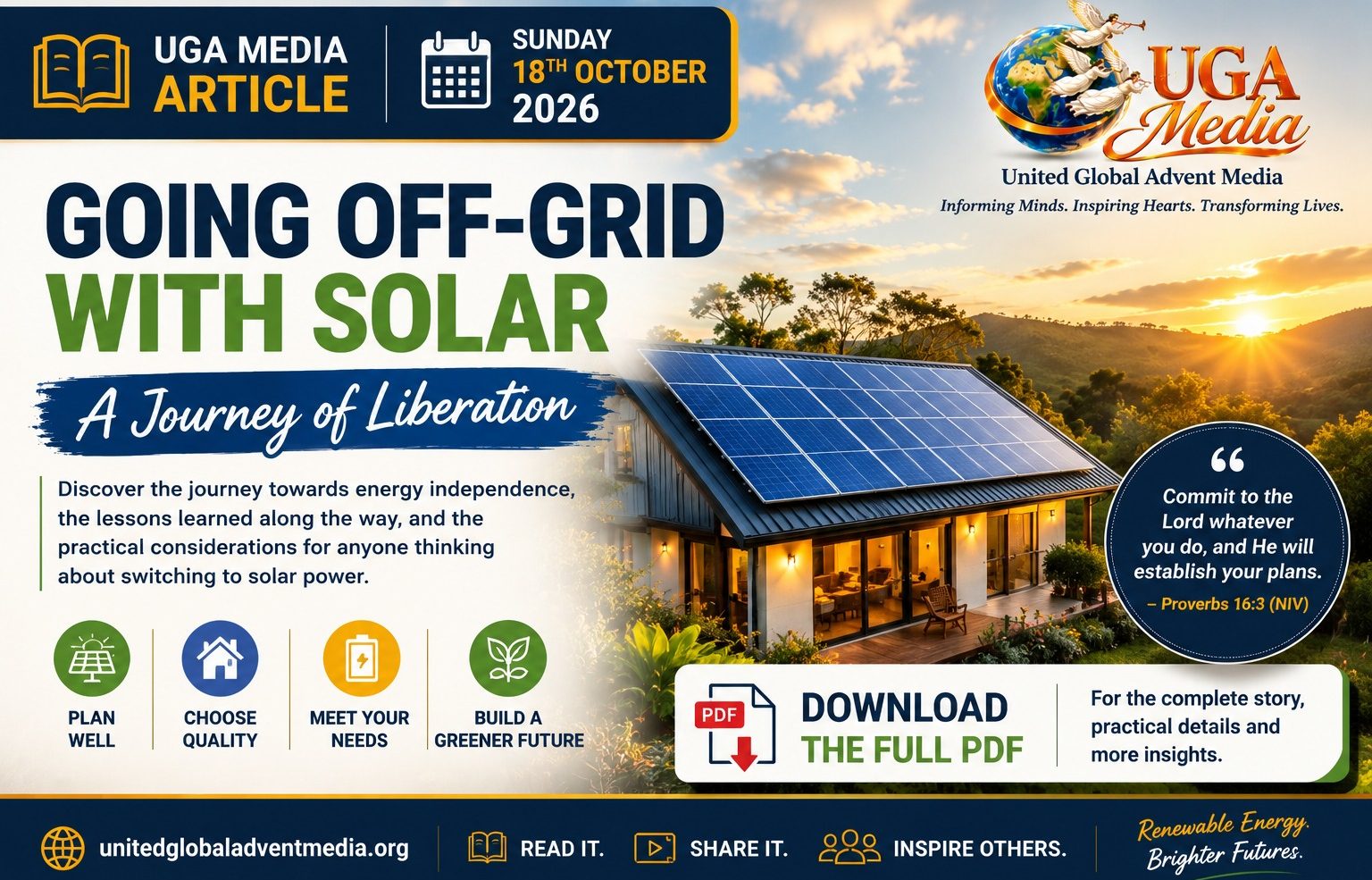
Discover the journey towards energy independence, the lessons learned along the way, and the practical considerations for anyone thinking about switching to solar power.
The Freedom of Going Off-Grid
What does it mean to become less dependent on conventional electricity? For some, it is about reducing monthly bills. For others, it is about gaining greater control over their energy supply, supporting agricultural activities, and embracing a more independent way of life.
In “Going Off-Grid with a Solar System: A Journey of Liberation,” the author shares a personal journey into solar energy, describing the decisions, learning experiences, and practical considerations involved in moving away from conventional electricity.
Going off-grid is not necessarily an easy or inexpensive decision. It requires planning, patience, and a willingness to learn. Yet, with careful preparation, solar energy can offer greater independence and a new way of thinking about how we generate and use electricity.
Starting Small and Learning Along the Way
The journey begins with a simple principle: know what you want and understand why you want it.
The author reflects on starting with little knowledge about solar panels before making the decision to embrace solar energy. That decision became an opportunity to learn how solar systems work and how the energy available from the sun can be used to meet everyday needs.
The experience reminds us that new beginnings often require us to step beyond what we already know. With determination, research, and a willingness to learn, a challenging decision can become a valuable learning experience.
The article also draws inspiration from the biblical principle of not despising small beginnings. Just as the author gradually developed an understanding of solar energy, anyone considering a similar journey can begin by learning the basics before making major investments.
Planning Before You Invest
One of the key lessons from the journey is that a solar system should be selected according to your actual needs, not simply its price or advertised capacity.
Before investing in solar energy, the author highlights several important considerations:
- Your energy needs: Identify the appliances, equipment, and activities you need to power.
- The size of your property: A family home and a working farm may have very different electricity demands.
- Your daily activities: Lighting, household appliances, water pumping, irrigation, and machinery all affect energy consumption.
- Equipment quality: Panels, inverters, and batteries need to be chosen carefully for reliability and compatibility.
- Future expansion: Consider whether your energy needs may increase over time.
These considerations are especially important for farmers and people managing several properties, where electricity may be needed for both domestic and agricultural purposes.
Understanding the Main Components of a Solar System
For anyone new to solar energy, the author explains the basic components of a solar power system.
Solar panels capture sunlight and generate direct-current (DC) electricity. An inverter converts this electricity into alternating-current (AC) electricity suitable for most household appliances. Batteries store energy for use when sunlight is insufficient, such as at night.
The right combination of these components depends on how much electricity you use, when you use it, and whether your system must support demanding activities such as irrigation.
The author shares experiences from setting up solar power for a farm, including considerations around inverter capacity, three-phase electricity, water pumps, and equipment used for agricultural work.
These examples demonstrate why careful planning matters. A system designed for lighting alone may not meet the needs of a household with many appliances or a farm with electrically powered machinery.
Please note: The equipment sizes and recommendations discussed in the full PDF reflect the author’s experience and examples. Solar requirements vary with location, usage, equipment specifications, and installation conditions. Consult a qualified solar professional for an assessment before purchasing or installing a system.
Choose Quality and Do Your Research
The journey also highlights the importance of choosing reliable equipment and avoiding rushed decisions.
A solar system is a significant investment, and the cheapest option may not always be the most suitable. Before buying, compare specifications, warranties, compatibility, maintenance requirements, and the reputation of suppliers and installers.
The author shares personal preferences regarding solar panel brands, inverters, and lithium-ion batteries, alongside lessons drawn from practical experience.
Another important recommendation is to learn from several people who already use solar power. Different experiences can help you ask better questions, understand potential challenges, and make a more informed decision.
The biblical reminder in Colossians 3:23 encourages us to approach our work with dedication and care. Applied to a project such as going off-grid, this principle invites us to value thoughtful preparation and quality rather than making decisions in haste.
Is Going Off-Grid Right for You?
Going off-grid is not a decision everyone needs to make. The best choice depends on your circumstances, electricity needs, budget, and long-term plans.
For some households, a modest solar installation may be sufficient. For farms and properties with heavier energy demands, a more carefully designed system may be necessary. Others may prefer to retain a connection to conventional electricity.
The important thing is to understand your needs, explore your options, and make a decision based on sound information rather than pressure or assumptions.
The journey described in this article offers a useful starting point for anyone curious about solar energy, energy independence, or the practical realities of powering a home or farm.
Continue Reading: Download the Full PDF
Would you like to learn more about the author’s experience and explore the practical details of going off-grid?
Download the full PDF, “Going Off-Grid with a Solar System: A Journey of Liberation,” for further reading.
The complete document explores the author’s personal journey in greater detail, including solar system planning, inverter and battery considerations, agricultural energy demands, equipment choices, and lessons learned along the way.
Whether you are considering solar power for your home, planning an agricultural project, or simply interested in learning more about renewable energy, the full article offers additional insights to help you continue your research.
Read the full story. Explore the lessons. Make informed decisions.
Continue exploring practical knowledge and inspiring ideas with UGA Media.
UGA Media — Informing Minds. Inspiring Hearts. Transforming Lives.
Visit: unitedglobaladventmedia.org


Leave a Reply