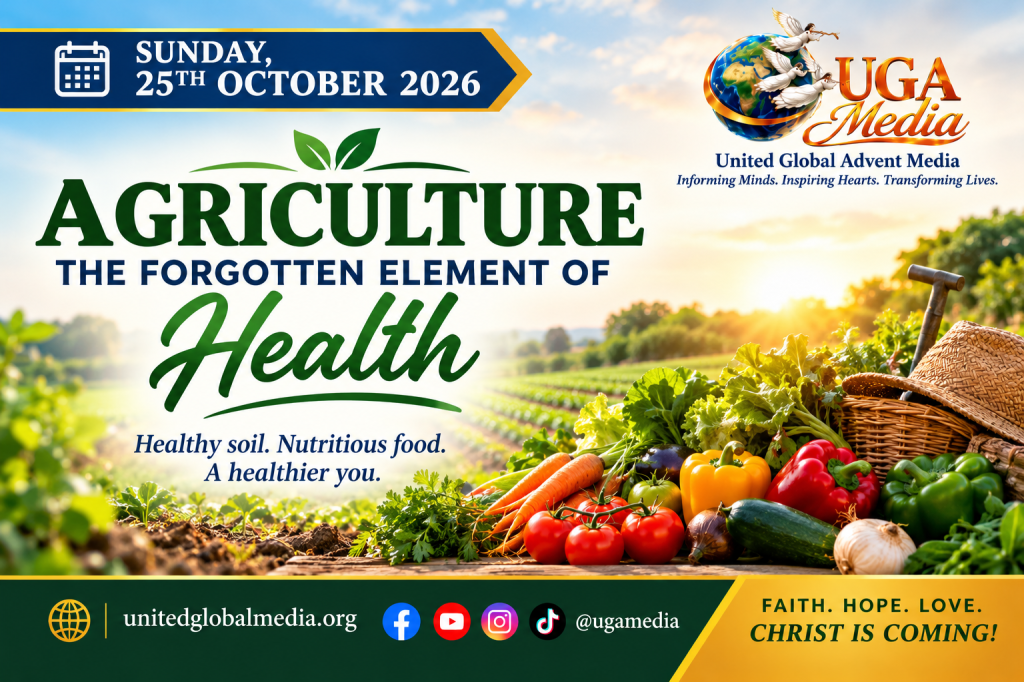
Agriculture: The Forgotten Element of Health
UGA Media Feature | Nurturing the Mind, Body, and Spirit
Key Scripture: Genesis 2:15 (KJV)
“And the LORD God took the man, and put him into the garden of Eden to dress it and to keep it.”
Rediscovering God’s Original Design for Health
In a world where health is often discussed in terms of diet, exercise, and medical care, one important element can easily be overlooked: working with the soil.
The document Agriculture: The Forgotten Element for Health invites us to revisit the creation account in Genesis and rediscover the purpose God gave humanity in the Garden of Eden. Before sin entered the world, Adam was entrusted with the responsibility of tending and keeping the garden. Work was not designed as a curse, but as a blessing that would develop his abilities, strengthen his body, and bring fulfilment.
Drawing on Scripture and the writings of Ellen G. White, the article presents agriculture and gardening as more than ways of producing food. They are opportunities for personal growth, improved well-being, and a closer relationship with the Creator.
1. Agriculture and Mental Well-being
Gardening calls for discipline, order, responsibility, and perseverance. A garden cannot be rushed; the soil must be prepared, seeds planted, and young plants cared for until they mature.
These activities teach patience and encourage us to work with purpose. The document explains that useful employment was part of God’s original plan for humanity and quotes Ellen G. White in Patriarchs and Prophets, page 50: “Useful employment was appointed to man as a blessing. It would bring pleasure, health, and strength.”
Working in a garden can also provide a welcome change from the pressures of daily life. Time outdoors, purposeful activity, and contact with nature may support emotional well-being. The garden becomes a place to slow down, focus, and learn through experience.
2. Agriculture and Physical Health
Genesis 2:7 reminds us that God formed humanity from the dust of the ground. The document uses this connection to encourage us to rediscover the value of working with the earth.
Gardening involves physical movement, time outdoors, and engagement with the natural environment. Digging, planting, watering, and maintaining a garden can contribute to an active lifestyle while offering opportunities for fresh air and sunlight.
The document also discusses soil microorganisms and possible connections between contact with soil and emotional or immune health. These scientific claims require careful interpretation, and gardening should not be regarded as a substitute for professional medical care. Nevertheless, gardening can be a practical way to incorporate purposeful movement and time in nature into everyday life.
3. Agriculture and Spiritual Growth
Perhaps the most meaningful lesson is the spiritual one. The document presents the garden as a classroom in which God teaches through nature.
Consider the journey of a seed. The soil must be prepared before planting; growth takes time; young plants need consistent care; and a harvest comes only after a season of patience and effort. These stages can remind us of the importance of faith, perseverance, stewardship, and trust in God’s timing.
Isaiah 28:26 points to God as the One who instructs the farmer. Jesus also used familiar examples from agriculture, including the parable of the sower, to teach spiritual truths.
When we take time to work in a garden and observe the natural world, ordinary activities can become opportunities for reflection, gratitude, and spiritual learning.
Bringing the Lesson into Daily Life
You do not need to own a large farm to benefit from gardening. A small backyard plot, a few containers, or a modest vegetable garden can provide a starting point.
Even if your main occupation lies in another field, consider setting aside time to plant, nurture, and care for something living. The goal is not simply to produce a harvest, but to rediscover the value of purposeful work and the lessons God has placed in nature.
Agriculture may not be the first thing that comes to mind when we think about health, but this study challenges us to see how gardening can bring together physical activity, mental refreshment, personal discipline, and spiritual reflection.
Continue Reading: Download the Full PDF
Would you like to explore this subject in greater detail?
Download the full PDF, “Agriculture: The Forgotten Element for Health,” to read the complete discussion of agriculture in God’s original plan for humanity and its relationship to mental, physical, and spiritual well-being.
The document expands on the biblical foundations of purposeful work, the lessons that can be learned from the soil and plant growth, and the importance of making room for gardening even when life is busy.
Take time to read, reflect, and consider how you can bring these principles into your own life.
Read. Reflect. Grow.
Continue exploring practical knowledge and biblical insights with UGA Media.
UGA Media — Informing Minds. Inspiring Hearts. Transforming Lives.
Visit unitedglobaladventmedia.org for more articles, Bible studies, and resources for healthy, purposeful living.


Leave a Reply