The Ministry of Reconciliation: Forgive, Trust, and Remember
UGA Media Bible Study | Thursday, 29 October 2026
Key Scripture: 2 Corinthians 5:18–19 (KJV)
“And all things are of God, who hath reconciled us to himself by Jesus Christ, and hath given to us the ministry of reconciliation; To wit, that God was in Christ, reconciling the world unto himself, not imputing their trespasses unto them; and hath committed unto us the word of reconciliation.”
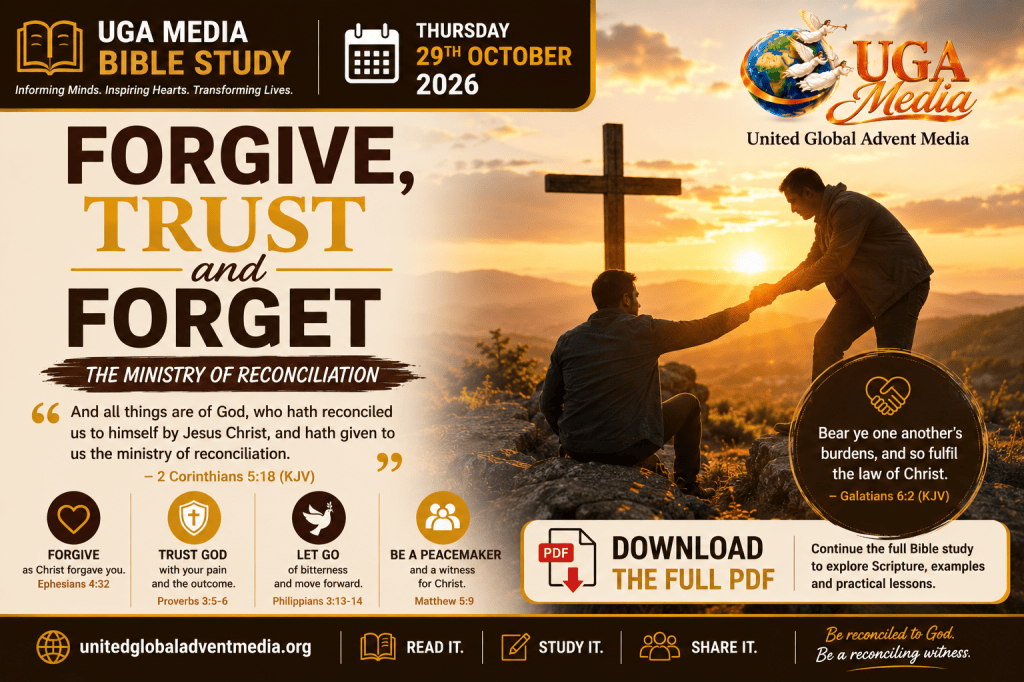
At Every Crossroad, a Choice of Reconciliation
Life often brings us to crossroads where we must decide how to respond to disappointment, betrayal, conflict, and hurt. Someone may wrong us, refuse to apologise, or carry on as though nothing has happened. In such moments, we face a deliberate choice: will we allow bitterness to take root, or will we seek God’s help to respond in a Christlike way?
Scripture reminds us that God never abandons us in these difficult seasons. Even when forgiveness seems impossible, He invites us to trust Him and allow His grace to work deeply in our hearts.
This Bible study explores three key aspects of reconciliation: forgiving others, trusting God in the process of restoration, and choosing not to hold past wrongs against those who have hurt us.
1. Forgiveness That Begins and Flows from God
The ministry of reconciliation begins with the character of God Himself. When sin separated humanity from Him, God took the initiative to restore the broken relationship through Jesus Christ.
Philippians 2:5–8 presents Christ’s example of humility, self-denial, and sacrificial love. Jesus did not pursue reconciliation by protecting His own interests; He gave Himself completely to bring us back to God.
In the same way, 2 Corinthians 5:17–20 calls those who have been reconciled to God to become ambassadors for Christ, carrying His message of reconciliation to others.
Forgiveness, therefore, is more than simply saying, “I forgive you.” It involves surrendering our desire for revenge and becoming willing to seek healing and restoration where it is wise and possible.
Jesus taught His followers to forgive repeatedly (Matthew 18:21–22). His response to Peter after Peter’s denial is a powerful example. In John 21:15–17, Jesus gave Peter an opportunity to reaffirm his love and entrusted him again with responsibility in ministry.
This reminds us that failure does not have to be the final word in a person’s story. God’s desire is to restore and transform lives.
2. Trusting God Faithfully in Seasons of Pain
Forgiving someone who has deeply wounded us can be especially difficult when the person shows no remorse. Yet Scripture calls us to place our confidence in God rather than allow another person’s actions to determine the condition of our hearts.
Joseph’s experience illustrates this principle. His brothers betrayed him and sold him into slavery, yet he did not allow bitterness to define his future. When he eventually held authority over them, he chose compassion instead of revenge.
In Genesis 50:20, Joseph told his brothers:
“But as for you, ye thought evil against me; but God meant it unto good, to bring to pass, as it is this day, to save much people alive.”
Joseph did not pretend that their actions were harmless. He recognised the wrong they had done, but he also recognised God’s ability to bring good out of painful circumstances.
Trusting God does not mean denying our pain or pretending that injustice never occurred. It means placing our pain, our desire for justice, and our future in His hands, while choosing not to be ruled by bitterness.
Jesus demonstrated this spirit even on the cross when He prayed for those who crucified Him (Luke 23:34). Through His example, we see that forgiveness requires divine grace, not merely human effort.
3. Remembering Without Resentment: What Forgetting Really Means
What does it truly mean to “forget” when the memory of a painful experience keeps returning?
This study explains that forgetting does not mean losing the memory of what happened. Rather, it means choosing not to continually hold another person’s past wrongs against them or to use those wrongs as a weapon.
Philippians 3:13–14 encourages us to leave what is behind and press forward toward the calling God has placed before us. Although Paul is speaking about his own spiritual journey, the principle reminds us not to let the past prevent us from moving forward.
Forgiveness may take time, especially after deep hurt. Memories may return, and healing may be gradual. Each time they do, we can ask God to help us respond without revenge, hatred, or a desire to punish.
Importantly, forgiveness does not mean ignoring danger, excusing abuse, or removing appropriate boundaries. Reconciliation may require honesty, accountability, repentance, and demonstrated change. We can release resentment to God while still taking wise steps to protect ourselves and others.
The goal is not to pretend that nothing has happened, but to stop allowing what happened to control our hearts and define every future interaction.
A Heart Made Ready for Genuine Reconciliation
The ministry of reconciliation calls us to reflect the grace God has shown to us. It invites us to take the initiative in seeking peace, to trust God when restoration is difficult, and to treat others with the same mercy we ourselves desire to receive.
We cannot change another person’s heart, but we can surrender our own hearts to Christ. Through His grace, we can learn to forgive, pursue restoration where it is wise and safe, and move forward without carrying the burden of revenge.
Questions for Prayerful Reflection
- Is there someone whose actions I am still holding against them?
- What would it look like, in my daily life, to trust God with this painful experience?
- How can I actively pursue peace while maintaining healthy and necessary boundaries?
Continue the Study at Home: Download the Full Bible Study PDF
Would you like to explore the biblical examples and practical lessons in greater depth?
Download the full PDF, “Ministry of Reconciliation – Forgive, Trust, and Forget,” for the complete Bible study. The document examines Christ’s example, Joseph’s response to betrayal, Jesus’ restoration of Peter, and the meaning of forgiveness when painful memories remain.
Set aside time to read the supporting Scriptures, reflect on the questions, and prayerfully consider how God may be calling you to practise reconciliation in your own life.
Read. Study. Reflect. Share.
May Christ’s example teach us to forgive with grace, trust God through our pain, and move forward with hearts free from bitterness.
UGA Media — Informing Minds. Inspiring Hearts. Transforming Lives.
Visit unitedglobaladventmedia.org for more Bible studies, devotionals, and faith-building resources.


Leave a Reply