Ice Cream, Anyone? What Is Really in Your Food?
UGA Media | Health & Lifestyle | Sunday, 1st November 2026
Key Scripture: 1 Corinthians 10:31 (KJV)
“Whether therefore ye eat, or drink, or whatsoever ye do, do all to the glory of God.”
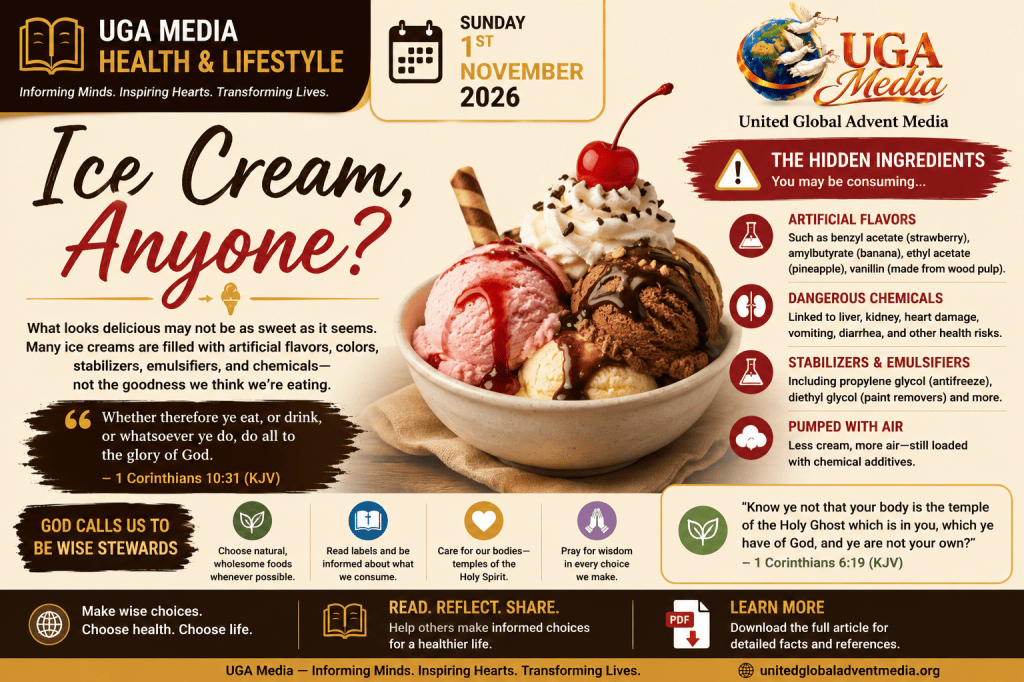
Beyond the Sweet Taste
Ice cream is a favourite treat for many people. Its creamy texture, colourful flavours, and tempting toppings make it difficult to resist. But have you ever stopped to think about what goes into the food you enjoy?
Commercially produced ice cream may contain more than milk, cream, sugar, and natural flavourings. Depending on the product, manufacturers may use added colours, flavourings, stabilisers, and emulsifiers to improve taste, texture, appearance, and shelf life.
The article “Ice Cream, Anyone?” invites readers to look beyond attractive packaging and delicious flavours and become more aware of the ingredients in their food.
The question is not simply whether ice cream tastes good, but whether we understand what we are choosing to consume.
Understanding Food Additives
Food additives serve different purposes in food production. Some help ingredients mix together, others maintain a smooth texture, and some enhance flavour or appearance.
For example, vanilla-flavoured ice cream may use natural vanilla extract, artificial vanillin, or a combination of flavourings. Similarly, fruit-flavoured products may contain fruit ingredients, added flavourings, or both.
The names on an ingredient list can sometimes be unfamiliar, making it tempting to overlook them. Yet learning to read food labels helps us make more informed decisions about what we buy and eat.
It is important to remember that an artificial ingredient is not automatically harmful simply because it is artificial. The safety of a food additive depends on the particular substance, its permitted use, and the amount consumed. Claims about specific ingredients and their health effects should be assessed using reliable scientific evidence.
The original PDF raises concerns about several additives and manufacturing practices. Readers are encouraged to explore these claims thoughtfully and seek credible information before drawing conclusions.
Caring for the Body God Has Given Us
Our food choices are part of the way we care for ourselves. Scripture reminds us in 1 Corinthians 6:19–20 that our bodies are temples of the Holy Spirit and that we should glorify God in our bodies.
This principle encourages us to approach health with responsibility and gratitude. Rather than making food choices based only on taste, price, or advertising, we can consider nutritional value, ingredients, portion sizes, and how our eating habits affect our overall well-being.
Here are four practical habits to consider:
- Read food labels. Check the ingredients, nutritional information, and serving sizes before purchasing packaged foods.
- Choose a varied diet. Include fruits, vegetables, whole grains, legumes, and other nutritious foods in your meals.
- Enjoy treats thoughtfully. Ice cream can be enjoyed occasionally as part of a balanced diet; moderation matters more than fear.
- Seek reliable information. When you encounter alarming claims about an ingredient, consult trustworthy food-safety and public-health sources.
Making wise choices does not mean living in constant fear of food. It means developing the knowledge and habits that help us care for our bodies consistently.
Becoming Responsible Consumers
We live in a world where food products are marketed to appeal to our senses. Bright packaging, appealing descriptions, and an abundance of flavours can influence what we purchase.
Taking time to understand the products we consume helps us become more responsible consumers. It also encourages us to ask questions, compare available options, and make decisions based on evidence rather than appearance alone.
As Christians, we can approach these decisions with balance. We should care about our health without spreading unnecessary fear, judging others for their choices, or treating every unfamiliar ingredient as dangerous.
Our goal should be informed stewardship: caring for the bodies God has entrusted to us while enjoying food with gratitude and wisdom.
Continue Reading: Download the Full PDF
What other ingredients and manufacturing practices does the original article discuss?
Download the full PDF, “Ice Cream, Anyone?”, to explore the author’s concerns about artificial flavourings, stabilisers, emulsifiers, and other ingredients used in commercial ice cream.
The document provides additional examples and perspectives on food production. As you read, consider its claims carefully and compare specific health statements with reliable scientific and food-safety information.
Read. Reflect. Research. Make informed choices.
May we learn to care for our bodies wisely, approach health information thoughtfully, and honour God in our everyday decisions.
UGA Media — Informing Minds. Inspiring Hearts. Transforming Lives.
Visit unitedglobaladventmedia.org for more health, lifestyle, and faith-building resources.


Leave a Reply