UGA Media Bible Study | Thursday, 5 November 2026
Key Scripture: Ephesians 2:8–9 (KJV)
“For by grace are ye saved through faith; and that not of yourselves: it is the gift of God: Not of works, lest any man should boast.”
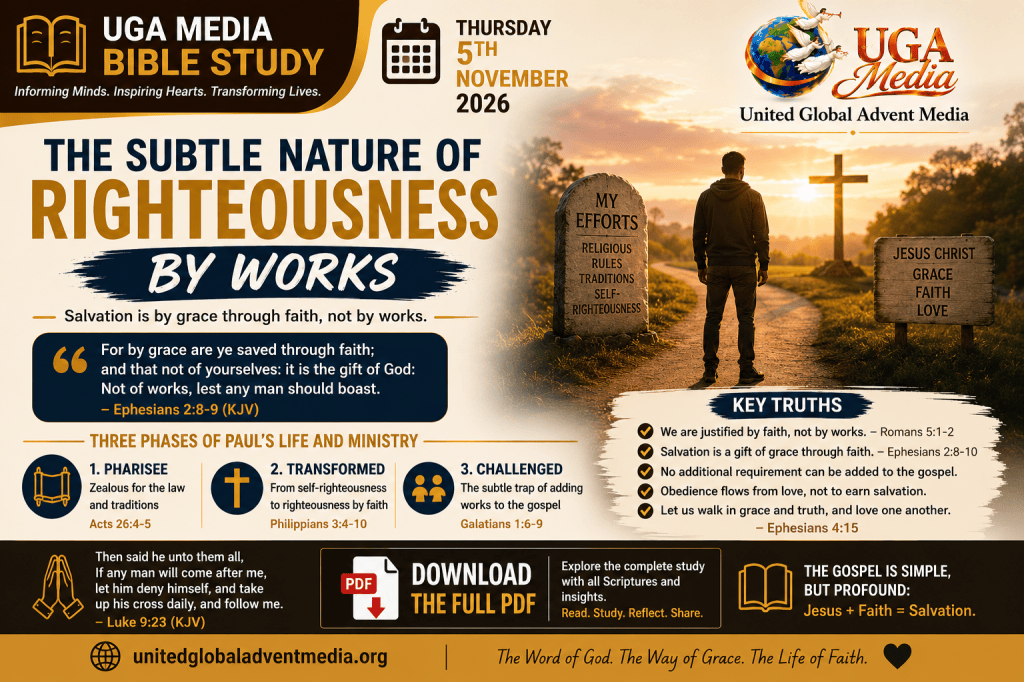

Christ or Our Own Works?
There is a familiar saying: “God helps those who help themselves.” While it may sound like wise counsel, have we considered how easily this mindset can shape our understanding of salvation?
At times, often without realising it, we begin to measure our relationship with God by our religious activities, personal discipline, biblical knowledge, or outward conduct. We may even start to believe that certain things we do—or avoid doing—make us more deserving of God’s favour and acceptance.
This is the subtle danger of righteousness by works: placing our confidence in our own efforts rather than in the saving grace of Jesus Christ.
The life of the apostle Paul provides a compelling illustration of this struggle.
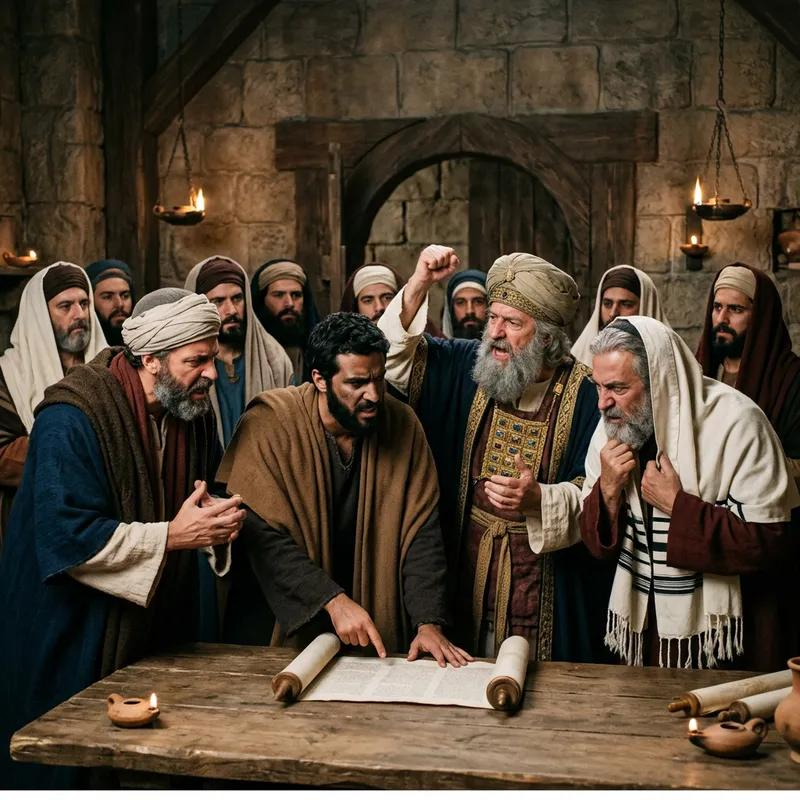
1. Paul’s Transformation: From Self-Reliance to Christ
Before his encounter with Jesus, Paul—then known as Saul—was a devoted Pharisee who took great pride in his religious heritage and strict observance of the law.
In Acts 26:4–5, Paul describes his former way of life and his standing within Judaism. He was intensely zealous, convinced that he was defending God’s cause. Yet this very zeal led him to persecute the followers of Christ.
His experience reminds us that religious commitment, doctrinal knowledge, and outward obedience do not necessarily mean that we truly know God.
After encountering Christ, Paul’s understanding changed completely. In Philippians 3:4–10, he explains that the things he once regarded as gain became insignificant compared with the surpassing worth of knowing Jesus Christ.
His confidence was no longer in his religious achievements but in the righteousness that comes through faith in Christ.
This transformation raises a vital question for every believer: Is my confidence in what I do for God, or in what Christ has done for me?

2. Salvation: Gift, Not Reward
In Romans 5:1–2, Paul states the foundation of salvation plainly: we are justified by faith and have peace with God through our Lord Jesus Christ.
Ephesians 2:8–10 further clarifies that salvation is by grace through faith, not by works. Yet verse 10 reminds us that we are created in Christ Jesus for good works.
This distinction is crucial.
Good works are not the price we pay for salvation; they are the fruit of a life transformed by God’s grace. We do not obey God in order to earn His love; we respond in obedience because we have already received His love.
When religious practices become conditions we believe must be met to earn God’s acceptance, we risk shifting our trust away from Christ and toward ourselves.
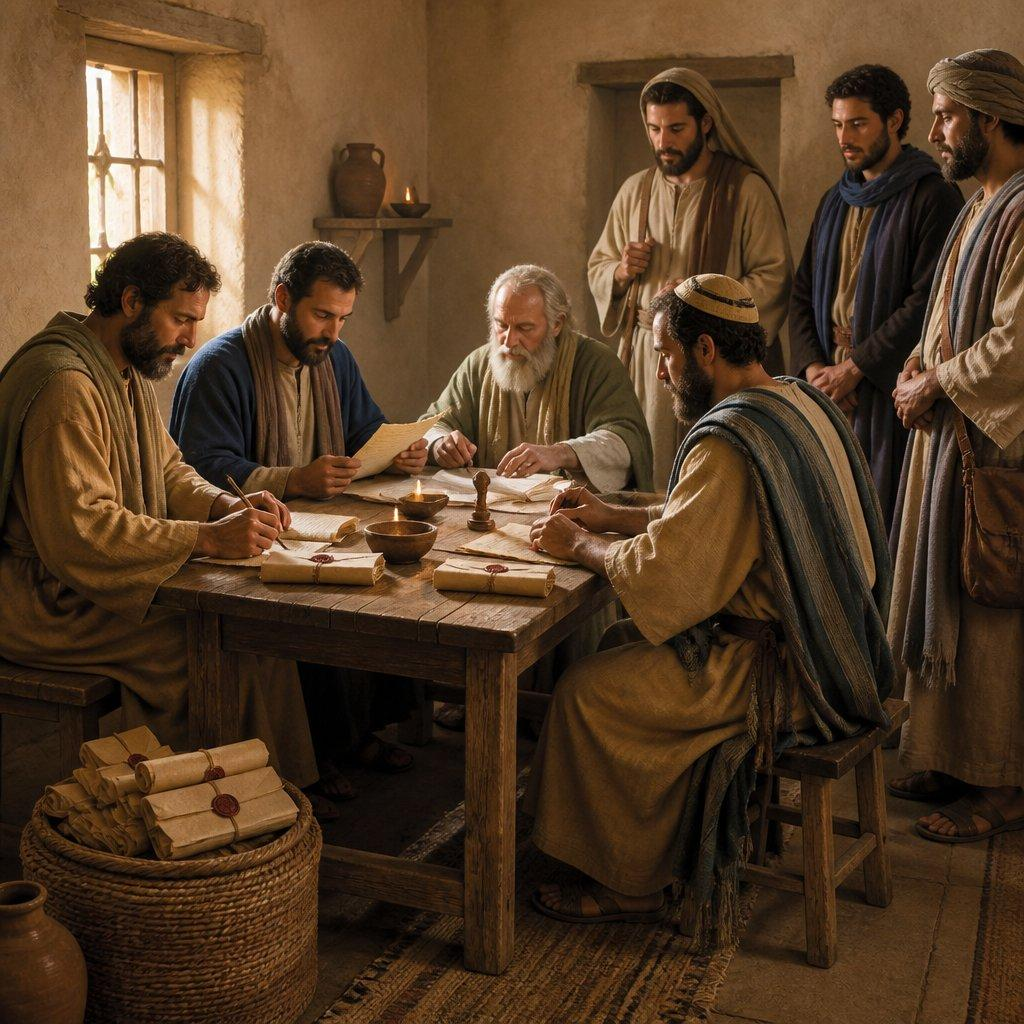
3. The Danger of Adding to the Gospel
The early church faced this very issue. In Acts 15:1, certain believers insisted that Gentile converts must be circumcised according to the law of Moses in order to be saved.
This teaching caused serious disagreement among the believers. The problem was not simply the practice of circumcision itself; it was the assertion that an additional requirement was necessary for salvation.
Paul firmly opposed this distortion of the gospel. In Galatians 1:6–7, he expresses deep concern that some were turning away from the grace of Christ to a different gospel.
The same principle speaks to us today. We must be careful not to make human traditions, personal convictions, or religious customs additional conditions for salvation.
Our beliefs and practices should always be tested by Scripture, but we must never replace Christ’s saving grace with a system of human requirements.

4. When Zeal Becomes a Spiritual Trap
One of the most subtle dangers of righteousness by works is that it can easily be mistaken for sincere devotion.
We may become so focused on outward practices that we begin to judge others by our personal standards. We may consider ourselves spiritually superior because of what we eat, which days we observe, how we dress, or the traditions we follow.
Romans 14:5–6 urges believers to act according to their own convictions before God, rather than turning personal observances into grounds for condemning others.
This does not imply that God’s commandments are unimportant or that truth is optional. Rather, it calls us to distinguish between God’s clear requirements and the human expectations we may place upon one another.
Peter’s experience in Acts 10:28 is also instructive. God taught him not to regard people of other nations as common or unclean. The gospel calls us to look beyond human divisions and to treat others with the dignity and love that God desires.
Our religious zeal should draw us closer to Christ and make us more loving, humble, and gracious—not more judgmental.
5. Where Should Our Confidence Rest?
Paul’s message is unmistakable: our salvation rests in Jesus Christ alone.
Galatians 5:1–6 warns against returning to a system of religious performance as the basis of acceptance with God. What truly matters is faith expressing itself through love.
This is not a licence to disregard God’s commandments. Ecclesiastes 12:13 reminds us to fear God and keep His commandments, and 1 Corinthians 10:31 calls us to glorify Him in everything we do.
The crucial difference lies in the motive behind our obedience.
We obey because we love God, trust Him, and desire to reflect His character. We do not obey in order to purchase salvation or to establish ourselves as more worthy than others.
True righteousness begins with knowing Christ and allowing Him to transform our hearts from within.

Questions for Personal Reflection
- Have I ever measured my spiritual worth by my religious activities or outward conduct?
- Do I sometimes judge others according to personal convictions that I have made into requirements for everyone?
- Is my obedience motivated by love and faith in Christ, or by a desire to earn God’s acceptance?
- How can I demonstrate the grace I have received when relating to people whose convictions differ from mine?
Continue the Study: Download the Full PDF
This article presents the central message of The Subtle Nature of Righteousness by Works, but there is much more to explore.
Download the full PDF to follow the complete study of Paul’s experience as a Pharisee, his transformation after encountering Christ, and the challenges faced by the early church concerning righteousness by faith.
Set aside time to read the supporting passages in Acts, Romans, Galatians, and Philippians. Reflect on how easily self-righteousness can shape our beliefs and practices without our awareness.
The central lesson is worth remembering: religious zeal by itself does not make us righteous. Our confidence must remain in Jesus Christ.
Read. Study. Reflect. Grow in grace.
May we never become so occupied with working for God that we neglect our greatest need—to know Christ Himself.
UGA Media — Informing Minds. Inspiring Hearts. Transforming Lives.
Visit unitedglobaladventmedia.org for more Bible studies, devotionals, and resources to strengthen your walk with God.


Leave a Reply