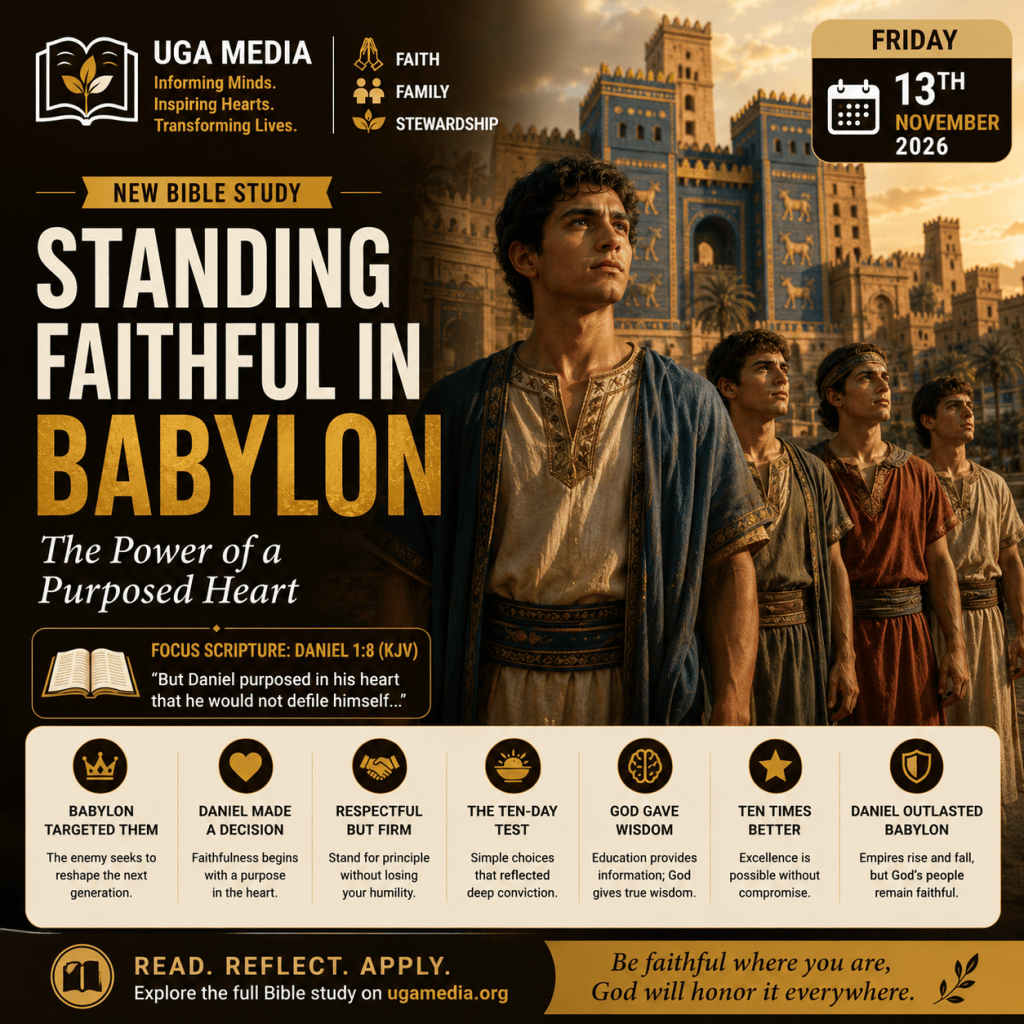
UGA Media | Bible Study
Focus Scripture: Daniel 1:8 (KJV)
“But Daniel purposed in his heart that he would not defile himself with the portion of the king’s meat, nor with the wine which he drank…”
When the World Tries to Change Who You Are

Have you ever found yourself in an environment where your values are challenged? Perhaps you have been pressured to compromise your beliefs to fit in, gain approval, advance your career, or avoid being different.
Daniel faced a similar challenge, but under circumstances far more difficult than most of us can imagine.
As a young captive taken from Jerusalem to Babylon, Daniel found himself in a foreign land, surrounded by a culture that sought to reshape his identity, beliefs, education, and lifestyle. Yet, despite the pressure to conform, he remained faithful to God.
The first chapter of Daniel offers an important lesson for every believer: we can live, learn, work, and excel in the world without allowing the world to take the place of God in our hearts.
1. Even When Everything Seems Lost, God Is Still in Control
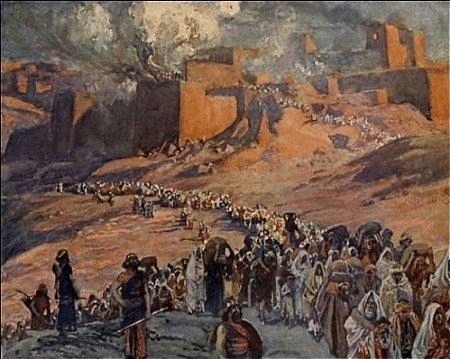
Daniel’s story begins with the fall of Jerusalem. Nebuchadnezzar, king of Babylon, besieged the city and took captives to Babylon (Daniel 1:1–2).
At first glance, this appeared to be a victory for Babylon and a defeat for God’s people. Their city had fallen, their temple treasures had been taken, and young people were being carried into captivity.
However, Daniel 1:2 reveals something significant: “The Lord gave Jehoiakim king of Judah into his hand.”
The events were not outside God’s knowledge or control. Even in the midst of national disaster, God’s purposes were still operating.
This reminds us that difficult circumstances do not mean God has abandoned us. There may be moments when life takes an unexpected direction, when familiar structures disappear, or when we find ourselves in situations we never planned for.
Yet God remains sovereign.
Reflection: When circumstances appear out of control, do you still trust that God is working?
2. Babylon Wanted More Than Captives

Babylon did not simply want to conquer Judah’s territory. It also wanted to influence the next generation.
Daniel 1:3–5 describes how the king instructed that selected young men from among the captives be brought into his palace. They were to be educated in the learning and language of the Chaldeans and prepared for service in the royal court.
Their education, language, environment, diet, and future employment were all being shaped by Babylon.
The objective was not merely to give them new knowledge. It was to reshape how they thought, what they valued, and where their allegiance belonged.
This raises an important question for us today: Can we learn from the world without allowing its values to replace biblical truth?
Daniel’s experience shows that learning about another culture does not necessarily mean accepting its worldview. He could acquire knowledge and develop intellectual competence without surrendering his faith.
Education, professional development, and exposure to different cultures can be valuable. However, we must remain discerning about the ideas and values we embrace.
Reflection: How can Christians receive education and participate in society without allowing their faith to be compromised?
3. They Could Change His Name, but Not His Identity
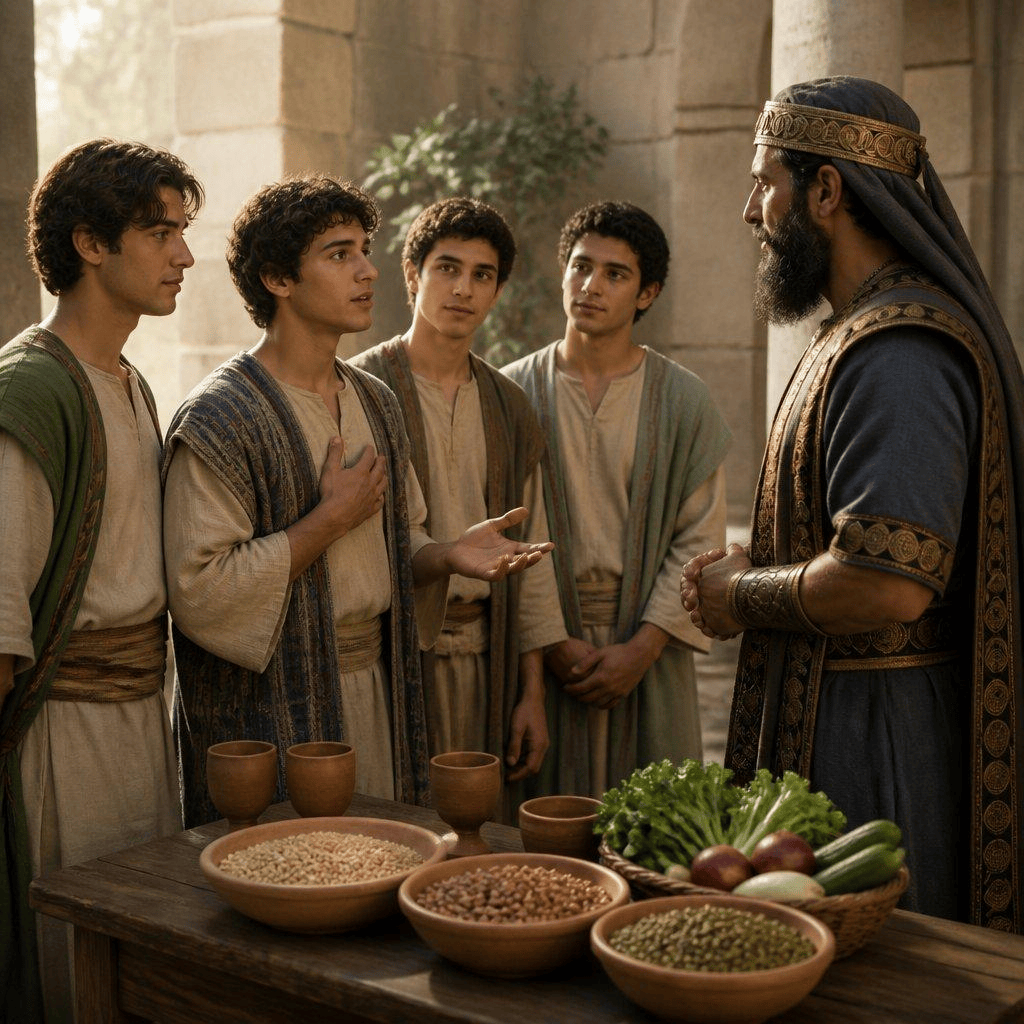
In Daniel 1:6–7, we learn that Daniel and his three companions were given new names.
Their original Hebrew names were connected with the God of Israel, while the new names reflected Babylonian culture and religion.
This was another attempt to assimilate them into their new environment.
Names often communicate identity, belonging, and values. By changing their names, Babylon was attempting to distance these young men from their former identity and introduce them to a new cultural system.
But there was something Babylon could not accomplish through a name change: it could not determine the convictions Daniel held in his heart.
The same lesson applies to us.
The world may attempt to define us through our culture, education, occupation, popularity, wealth, or social expectations. We may find ourselves in environments where our beliefs are considered outdated or inconvenient.
However, our identity should not be determined by the pressure around us. Our relationship with God must remain at the centre of who we are.
Our environment does not have to determine our identity.
4. The Turning Point: Daniel Purposed in His Heart

The most important decision in Daniel 1 is found in verse 8:
“But Daniel purposed in his heart that he would not defile himself…”
Notice that Daniel’s faithfulness began with a personal decision.
He did not wait until a major crisis arose. He did not wait until he was threatened with the lions’ den or the fiery furnace. Before any of those events, he had already settled the question of his loyalty to God.
His decision at the king’s table was a reflection of a conviction that had already been established in his heart.
This is one of the most important lessons of the chapter.
Faithfulness in great trials often begins with seemingly small decisions. The choices we make when nobody is watching, the principles we refuse to compromise, and the habits we develop daily prepare us for greater challenges.
We cannot expect to stand firmly during a major spiritual crisis if we continually surrender our convictions in ordinary situations.
Reflection: What decisions do you need to make today so that you will be prepared to stand faithfully tomorrow?
5. Firm in Principle, Respectful in Attitude
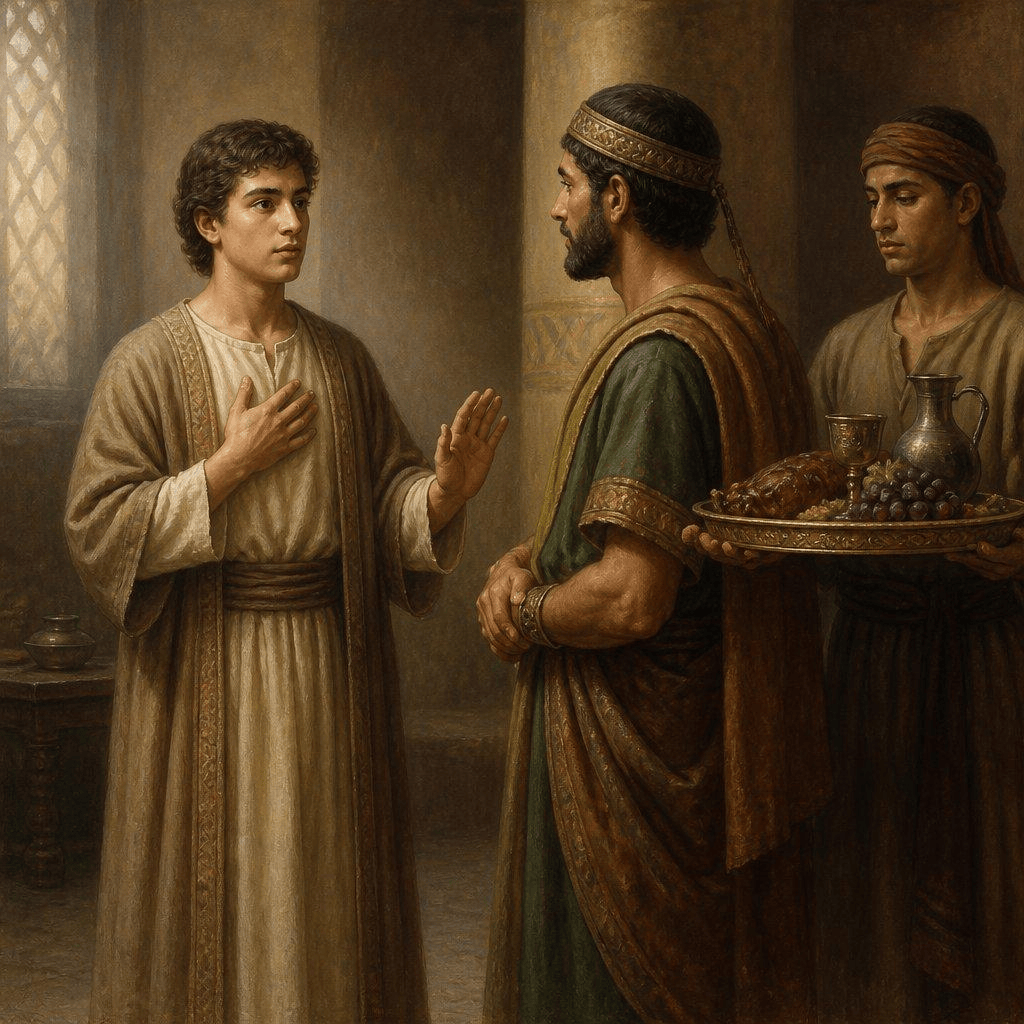
Daniel’s response is also worth examining.
He did not become rude, rebellious, or unnecessarily confrontational. Daniel 1:8 tells us that he requested permission not to defile himself.
When the official expressed concern about the consequences, Daniel proposed a ten-day test (Daniel 1:11–14).
This reveals an important balance: Daniel was uncompromising in principle but respectful in his approach.
Sometimes people assume that standing for one’s faith requires aggression, disrespect, or unnecessary conflict. Daniel demonstrates that conviction and courtesy can exist together.
We can remain firm in what we believe while treating others with kindness and respect, including those in positions of authority.
Our attitude should not undermine the very principles we claim to defend.
6. The Ten-Day Test: Faithfulness in Everyday Choices
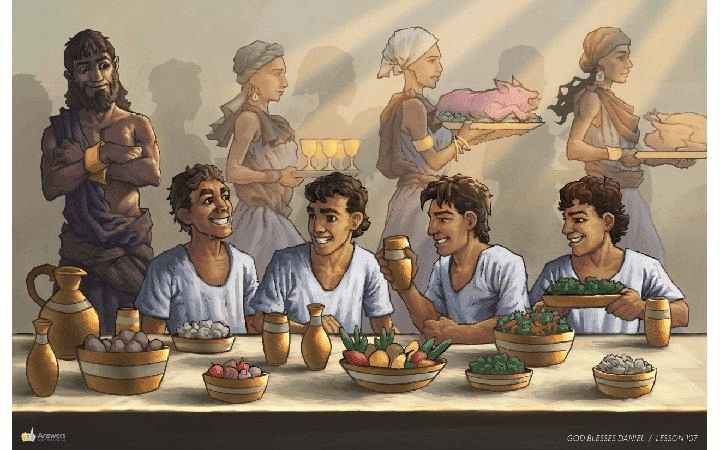
Daniel requested that he and his companions be given pulse to eat and water to drink for ten days. After that period, their condition would be compared with that of the young men eating the king’s provision (Daniel 1:11–16).
At the end of the test, Daniel and his companions appeared healthier than those who had eaten the king’s food.
This account presents an important connection between diet, health, the mind, and spiritual discernment.
Care of the body was not presented merely as a health issue. It was also part of Daniel’s commitment to remain faithful to God.
Our physical well-being matters. The choices we make concerning food, rest, and general care of our bodies can influence our ability to think clearly and carry out our responsibilities.
Daniel’s example invites us to consider whether our everyday lifestyle choices reflect the principles we profess.
7. God Is the Source of True Wisdom
Daniel and his companions were not passive. They studied, learned, and developed their abilities in Babylon.
However, Daniel 1:17 makes an important distinction:
“As for these four children, God gave them knowledge and skill in all learning and wisdom…”
They received education in Babylon, but God remained the ultimate source of their wisdom and ability.
This is a valuable lesson for students, professionals, and anyone pursuing knowledge.
Education can provide information, skills, and opportunities, but true wisdom comes from God. Our achievements should never lead us to forget the One who gives us understanding and ability.
Daniel did not reject excellence because he wanted to remain spiritually distinct. Instead, he demonstrated that faithfulness and competence can go hand in hand.
8. Ten Times Better: Excellence Without Compromise

When Nebuchadnezzar examined the young men at the end of their training, Daniel and his companions were found to be ten times better than the magicians and astrologers in the kingdom (Daniel 1:18–20).
Their separation from Babylon’s principles did not make them incapable of succeeding in Babylon’s environment.
They were spiritually distinct and intellectually competent.
This challenges the idea that remaining faithful to God means settling for mediocrity. Christians should strive for excellence in their education, work, relationships, and responsibilities.
We can be committed to biblical principles while becoming diligent, skilled, dependable, and useful in our communities.
Our faith should influence the quality of our work, not become an excuse for avoiding responsibility.
9. Daniel Outlasted Babylon
The chapter closes with a remarkable statement:
“And Daniel continued even unto the first year of king Cyrus.” (Daniel 1:21, KJV)
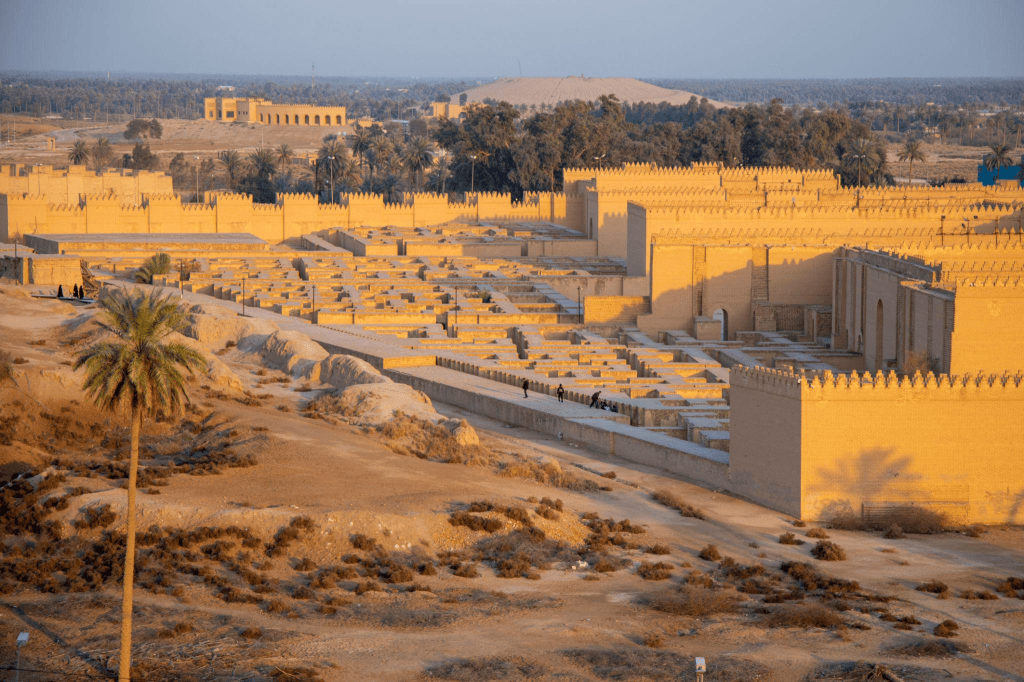
Kings changed. Governments changed. Empires changed. Babylon, which had appeared so powerful at the beginning of the chapter, eventually fell.
But Daniel remained.
The young captive introduced in Daniel 1 eventually lived long enough to witness the fall of the very empire that had taken him from his homeland.
Babylon appeared stronger than Daniel, but Daniel’s God was stronger than Babylon.
His long life of service reminds us that faithfulness is not simply about making one good decision. It is about continuing to walk with God through changing circumstances, different seasons, and unexpected challenges.
The Lesson: Stand in the Small Tests Before the Great Crisis
Daniel did not wait for the fiery furnace, the lions’ den, or the great prophetic visions to become faithful.
His preparation for the major trials ahead began with a seemingly small decision at the dinner table.
That is the central message of Daniel chapter 1.
The convictions we establish today shape the way we respond to the challenges of tomorrow. Every time we choose truth over convenience, obedience over compromise, and faithfulness over popularity, we strengthen our spiritual foundation.
Questions for Personal Reflection
- What are some ways modern culture attempts to influence the beliefs and values of Christians?
- How can we distinguish between gaining knowledge from the world and accepting values that conflict with God’s Word?
- What does Daniel’s approach teach us about standing firmly for our beliefs while remaining respectful?
- How do our daily lifestyle choices reflect our commitment to God?
- What small decisions can we make today to prepare ourselves for greater spiritual challenges tomorrow?
A Challenge for Today
Take a moment to examine your daily choices. Are there areas where you have allowed pressure, convenience, or the desire for acceptance to weaken your convictions?
Like Daniel, purpose in your heart to remain faithful to God. You do not need to wait for a major crisis to make that decision.
Those who will stand in the great crisis must first learn to stand in the small tests.
Closing Prayer
Heavenly Father,
Thank You for the example of Daniel and his companions. Teach us to remain faithful even when the world around us encourages compromise. Give us wisdom to distinguish between what is useful and what may draw us away from You. Help us to stand firmly for our convictions while treating others with kindness and respect.
May our decisions today prepare us for the challenges of tomorrow. Give us the courage to purpose in our hearts, just as Daniel did, and remain faithful to You in every circumstance.
In Jesus’ name, Amen.
Further Study: Read Daniel chapter 1 in its entirety and explore the accompanying study guide for additional questions and discussion.
Memory Verse: Daniel 1:8 (KJV)
“But Daniel purposed in his heart that he would not defile himself…”
UGA Media – Informing Minds. Inspiring Hearts. Transforming Lives.


Leave a Reply